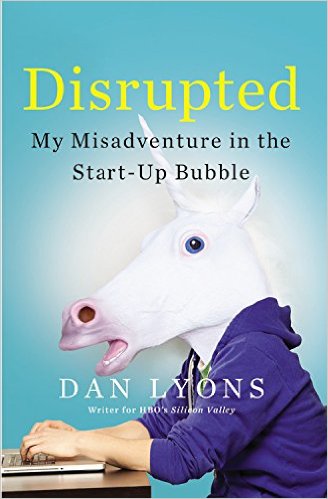
 Earlier this week I had the pleasure of reading Dan Lyon’s new book, Disrupted, which details his experience working at my own neighborhood tech company, Hubspot. It’s a well written piece that gives an account of where the culture of tech startups is going. While I don’t agree with everything in the book – it’d be pretty boring if I did, right? – I do think it’s important that we discuss where the industry is going.
The main takeaway from Disrupted is that the tech industry is becoming more and more like the PR/Advertising industry. Because venture capitalists prioritize consistent growth over profit when evaluating startups, the goal has shifted from “make a great product” to “produce a lot of hype.”
The effect this has on the internal culture of these companies is intense – instead of the classic nerdy, introverted and introspective type, these new startups are filling up with, for lack of a better term, ad people. Everything is by the numbers, and the quality of the product or service is secondary to making monthly sales quotas. The end goal is to get through an IPO, cash out, and move to the next gig.
Dan also covers a growing trend that I’ve witnessed first hand: VORP evaluations. Value over replacement player. Viewed in tandem with Netflix’s statement that “we’re not your family, we’re a team,” the new way employers view their employees is as resources only. This also paints a pretty bleak future for women who want children – why would a company keep you on during a pregnancy and the first, difficult years of having a child when they can just replace you?
So this is the future of work that we’re looking at, as a generation. I made the transition to contract earlier this year in response to this uber-competitive, always-on culture permeating public relations, and it’s alarming to know that it’s spreading to tech as well.
What can we do about it? As employees, it’s important to stand up for your rights – don’t work at a company that treats you like chattel. This can be extremely difficult, especially for those who are desperately looking for a job, but standing up for your right to be treated as a person is critical in pushing back this culture.
Tech leaders are the heavy hitters here, though. Founders, I urge you to keep a handle on your culture – don’t let the rush of funding and success blind you from what really matters. Make your company a place you would want to work. Make your company a place you’d want your children to work.
Phenomena like this don’t just happen, but we can make a better future of work if we put our minds to it.
 Rebecca Runkle